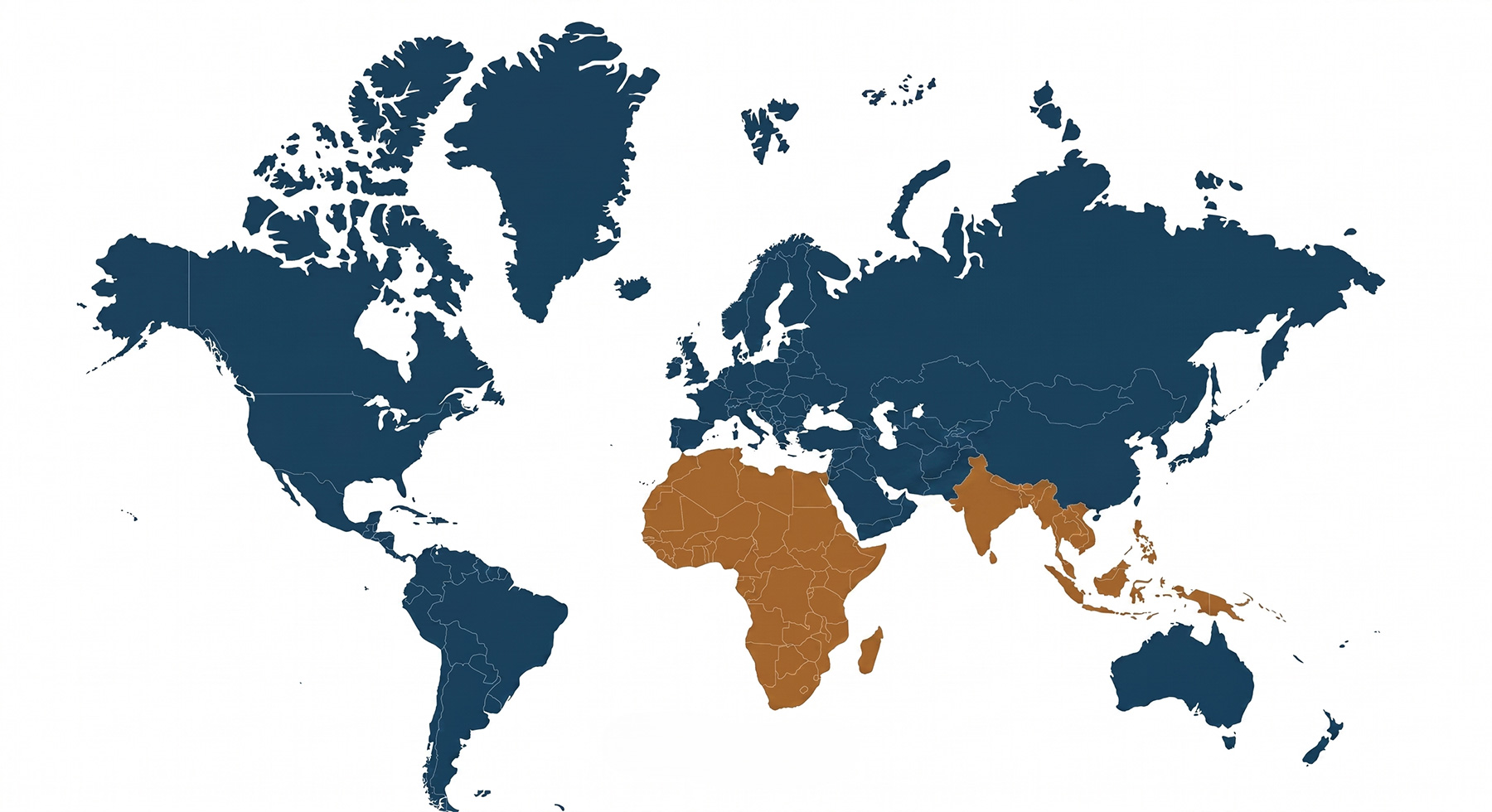
We have closed eight transactions in India, from a USD 2.5Mn term loan for a housing finance company to a USD 100Mn equity raise for an energy technology business.
What distinguishes the work is where the money comes from. Much of the capital we arrange for Indian borrowers is offshore — development finance institutions, impact debt funds and international lenders — which brings a different set of requirements from a domestic bank facility, and a different process for getting there.
Our Indian mandates fall into three groups.
For an Indian company, borrowing offshore is not simply a question of finding a cheaper lender. External commercial borrowings sit inside a regulatory framework that governs who may borrow, who may lend, the minimum average maturity, the all-in cost, and what the proceeds may be used for. A structure that works commercially can still fail on any one of those tests.
We work through that before the lender conversation starts, not after: whether the borrower is eligible, whether the intended lender is a recognised lender, whether the proposed end use is permitted, and whether the resulting cost after hedging is genuinely better than the domestic alternative. Sometimes the answer is that it is not, and it is cheaper for everyone to find that out early.
Where an ECB is the right structure, we arrange it — including foreign currency term loans and USD facilities for Indian borrowers.
Not all offshore funding has to be in foreign currency. Foreign portfolio investors can lend in Indian rupees by subscribing to non-convertible debentures, which leaves the borrower servicing debt in the currency it earns and does not have to get into the complications of hedging the hard currency loan. We advise on which route fits a given balance sheet and on what each one requires.
Our Indian work concentrates in four areas: financial services — NBFCs, microfinance, housing finance, infrastructure finance and fintech; climate and mobility, including electric vehicle and battery-swapping businesses; renewable energy; and early stage and growth companies in consumer.
USD 100 Mn Equity

USD 30 Mn INR-equivalent Term Loan

USD 15 Mn Senior Debt

USD 8 Mn Equity

| Borrower | Facility arranged |
|---|---|
| Energy technology | USD 100Mn equity |
| Microfinance institution | USD 30Mn equivalent INR term loan |
| Infrastructure finance company | USD 23Mn credit line |
| Infrastructure finance company | USD 20Mn credit line |
| Battery swapping | USD 15Mn senior debt |
| Health technology | USD 8Mn equity |
| NBFC | USD 8Mn equivalent INR term loan |
| Housing finance company | USD 2.5Mn term loan |
Whether you are looking at an offshore facility, domestic debt, structured finance, venture capital or a growth equity round, tell us what you are funding and we will tell you what the realistic options are. Our office is in Bandra Kurla Complex, Mumbai.